The Idea of Shinto for the Japanese Today
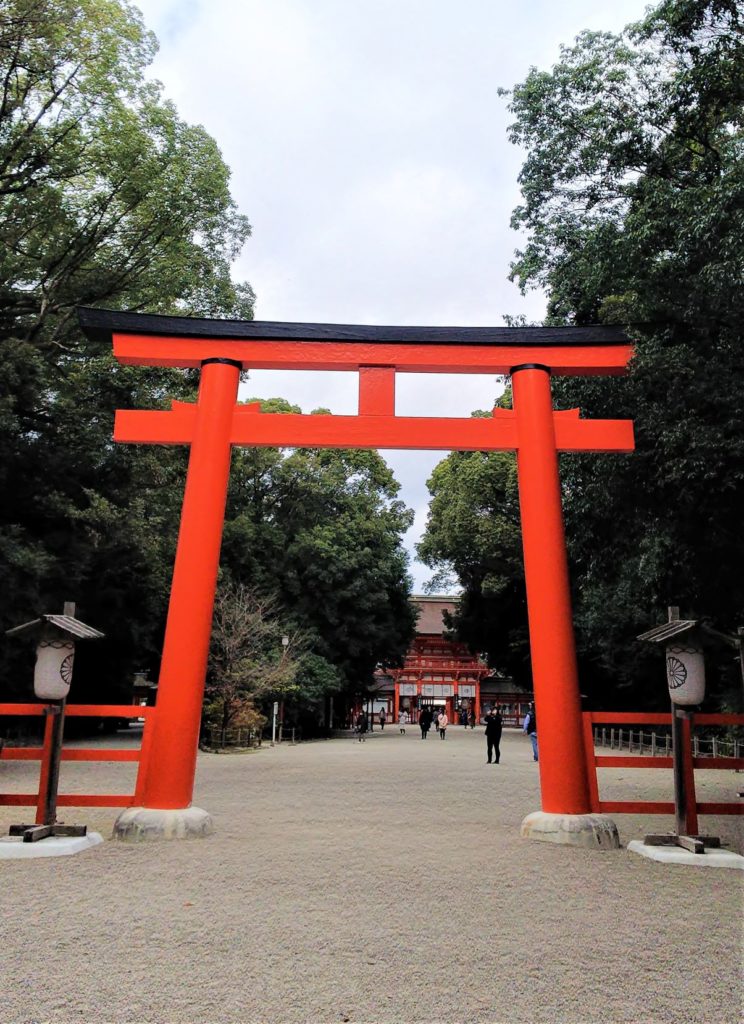
Shimogamo Shrine
In Japan, there are two main religions. One is Shinto and the other is Buddhism. Buddhism started in India about 2,500 years ago, and it is a religion with believers all over the world.
On the other hand, Shinto is the indigenous religion of Japan. It is based on worshipping nature, ancestors, and historical people such as the emperors. Shinto is a polytheistic religion, that is, there are a lot of deities in Shinto such as a deity of business success, academic success, love, household safety, and many other deities.
A shrine is a place where deities live, so it’s like a house for them. At the entrance of a shrine, we see a shrine gate called a torii in Japanese. It’s a symbol of the shrine and we are purified by passing through it. As I talked about in a previous blog post, there are many shrine gates at Fushimi Inari Grand Shrine.
Most Japanese people visit shrines on happy occasions such as New Year’s to pray for good fortune this year or during shrine festivals.
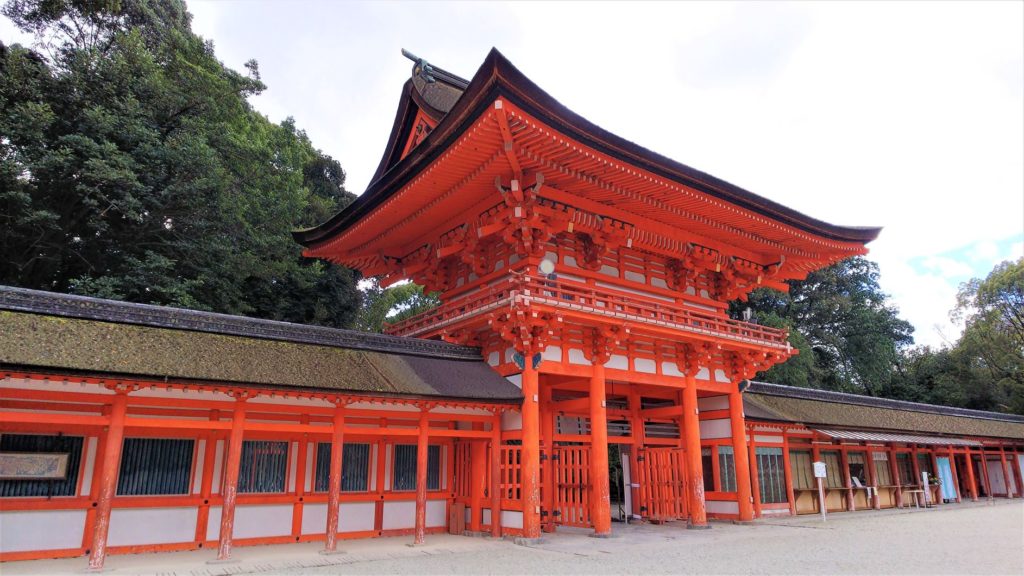
Also, we visit shrines at certain ages to pray for good health and happiness. Of course, people can go to shrines any day when they want to pray for their wishes, if they are interested in history, or if they like to take beautiful pictures or other reasons. So I think most Japanese people today consider Shinto a custom more than a religion.
At shrines, we can buy omamori, which are good luck charms. There are many different kinds of omamori, for good health, love, academic success, traffic safety, and many other things. You will see people buying omamori at shrines when you visit there. Most people don’t fully count on omamori, but we feel more relieved if we have them just in case.
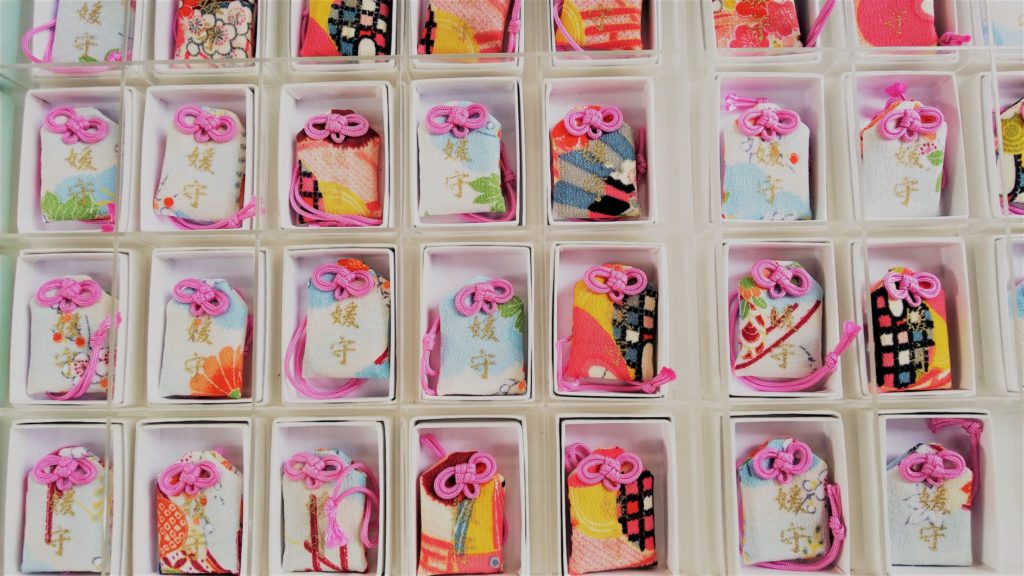
My favorite omamori is the one I bought once at Shimogamo Shrine. The name of the omamori is Himemamori. These omamori are colorful and each one has its own unique pattern that you can’t find anywhere else. Each one of them is so pretty that it takes time to choose one! My Himemamori brings me good encounters with work, opportunities, and people. I hope something good will happen and I’m very much counting on it!!
In my next blog post, I will talk about Toji, a temple with an amazing pagoda and a fun flea market every month.


Those pictures are beautiful! I would love to visit and see for myself some day!